

Couples therapy in English
For expat couples who want to feel close, connected, and on the same team again
Has your relationship been under pressure since moving abroad?
Maybe the dynamic has changed, distance has grown, or old conflicts have resurfaced.
I offer couples therapy in English for expat couples, online or in person in Odense, Denmark.
A space where you can reconnect, understand each other more deeply, and find your way forward.
We came to see Henriette when our marriage started falling apart after the birth of our twins. With her extensive knowledge of the pressure nomad life puts on a relationship and her eye for recognizing the dysfunctional patterns we had created between us, she helped us gain more emotional contact to ourselves and each other as well as a greater understanding of how to help each other with the twins. Today, we are grateful for being able to solve our conflicts in a more respectful manner and for having regained our intimacy.
- T.S. & H.C.S., American couple in Germany (online sessions)
When something feels off between you
You might recognise this:
You still care deeply for each other – but something feels distant.
Conversations turn into misunderstandings. Small things escalate more quickly than they used to. Conflicts are more frequent, and finding your way back to each other feels increasingly difficult.
Or perhaps things have gone quiet – and you no longer talk about what really matters.
Couples come to therapy for many reasons. Even couples still in love can experience difficulties. And for expat couples, the pressure of living abroad adds another layer.
Being far away from your usual support network means greater dependence on your partner. But this doesn’t always lead to a closer connection – you can be deeply dependent on your partner and still feel alone in the relationship.
If this resonates, know that you’re not alone.
Couples therapy can help you rebuild
Put simply, couples therapy helps you find your way back to each other.
In practice, this means working with the patterns in your relationship to understand what is happening between you – not just what is being said on the surface.
Through couples therapy, you can begin to:
-
communicate more openly and with less conflict.
-
feel emotionally closer and more connected.
-
understand yourself and each other more clearly.
-
handle disagreements without losing contact.
-
feel like a team again, rather than opponents.
-
build a new and stronger foundation for your relationship.
Key takeaway: The goal is not to avoid conflict – but to move through it in a way that brings you closer, not further apart.

Client case story:
How Laura and Mark rebuilt trust after betrayal
Laura and Mark came to therapy after an affair.
Living in Mark’s home country, Laura had given up her work, her language, and her network to build a life with him.
When his infidelity was revealed, it didn’t just break her trust in their relationship – it shook her sense of self and her nervous system to the core.
She became anxious, searching for answers and reassurance. Asking him the same questions again and again while shifting between anger, grief, and emotional shutdown.
Mark, overwhelmed with shame, would either defend himself or withdraw. Which for Laura only felt like further betrayal.
They were caught in a vicious cycle: The more she reached out, the more he pulled away, making her feel even more unsafe, alone, and desperate.
So, how did I proceed?
I slowed the process down and helped Mark stay present in Laura’s pain, taking responsibility without defence. Laura learned to express the fear beneath her anger: Do I matter to you?
We created structures for transparency, daily check-ins, and repair after conflict that made it possible to start rebuilding trust.
They had setbacks at times but gradually, the cycle softened.
Laura felt safer, with less need to test Mark.
Mark learned to stay present instead of withdrawing.
The affair no longer defined their relationship.
Their circumstances hadn’t changed: They were still navigating the challenges of being a cross-cultural couple. But they had created a more safe and sustainable connection, and a shared sense of being on the same team in this life.
Couples counselling can help you to…
-
Stay connected while navigating life abroad together.
-
Cope with loneliness, stress, and identity changes as expats.
-
Break out of the same arguments that keep happening.
-
Understand each other instead of misunderstanding.
-
Rebuild trust after hurt or betrayal.
-
Reconnect emotionally and physically, including intimacy and sex.
What happens in couples counselling?
Now, let’s take a look at what couples therapy actually involves.
In couples therapy, it's your relationship – and not the two of you as individuals – that is in therapy. Rather than focusing on who is right or wrong, we try to understand what happens between you when things become difficult.
Typically, we begin by exploring:
-
What brings you to therapy.
-
What happens in moments of conflict.
-
What you long for in your relationship.
-
When you are good for each other.
Together, we will establish your struggles and your hopes and dreams for the future. They may look alike – they may not.
Then, we will start exploring your patterns, the emotional baggage you both bring into the relationship – without judgement or taking sides – and how in certain situations you may trigger one another.
From there, we work on creating new ways of responding. On enhancing your communication and understanding of each other.
It is about helping you both feel heard, understood, and able to reconnect – even in difficult moments.
Start the process today by booking a free 25-minute consultation.
My approach to couples therapy
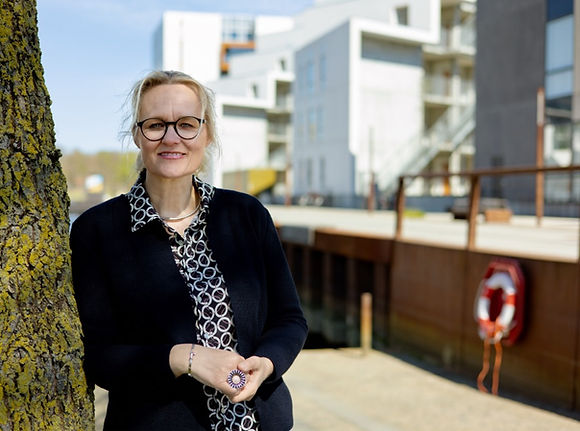
When you work with me, I will always ensure a safe and non-judgmental space for the both of you. I will support you equally, and I help you stay and deal with the difficult emotions.
The method I use is called Emotionally Focused Therapy (EFT). EFT is a well-documented approach and research shows, that 90% of couples completing an EFT-process experience significant improvements in their relationship, whilst 75% solve their crises.
In this approach, we pay particular attention to:
-
your attachment patterns
-
your emotional responses
-
what you each bring to your relationship
In doing so, you will gain a greater understanding of both yourself, your partner, and the patterns of your relationship.
You will be able to better support each other and resolve conflicts as a team.
And you will feel emotionally safe and closer connected to each other.
The practical details
-
Sessions last 75 minutes, including payment and scheduling.
-
Available as online couples therapy or in person in Odense, Denmark.
-
Sessions are typically weekly or every other week in the beginning.
-
As your relationship progresses, we will allow longer between sessions for you to consolidate your relationship.
-
Most couples are finished with treatment after 10-20 sessions.
Click here to read about fees, cancellation policy, and location.
Ready to take the first step?
You don’t need to have everything figured out.
You don’t even need to agree on everything before you start.
The next step is simply a conversation.
FAQ about couples therapy for expats


When to get couples counselling?
Couples come at many stages – during conflict, emotional distance, after infidelity, or simply to strengthen their bond. You do not need to wait until things feel critical – it’s often easier to help before crisis sets in. Therapy offers a safe space to explore challenges, understand your dynamic and each other more deeply, and create lasting connection and emotional safety.
What happens in couples therapy?
After an initial joint session where I ask questions about you as a couple and the troubles that you would like help with, I have an individual session with each of you. I do this to gain further understanding of you and your relationship as it enables me to quicker see the patterns that you get caught up in. We explore patterns in your interactions, uncover emotions beneath conflicts, and develop new ways of relating. Focus is on understanding both partners’ experiences, repairing connection, and building a relationship that feels safe, supportive, and emotionally attuned.
Do you take sides?
No! My role is to support the relationship and the emotional safety of both partners. I believe that we are all doing our best, and I work from a place of no shame – each person’s feelings and experiences are valid, and both are given space to be understood. Therapy is about creating fairness, empathy, and clarity, not assigning blame and shame.
Can couples therapy help after infidelity?
Yes. Infidelity often triggers deep insecurity and doubt. Therapy provides a structured, compassionate space to process the betrayal, explore the emotional impact, and rebuild trust. The goal is to create a relationship that feels emotionally safe and connected for both partners.
What if we are an expat couple from different cultures?
Cross-cultural expat couples may experience misunderstandings around communication, family roles, or belonging. Therapy helps translate these differences into insight and shared understanding, reducing conflict and supporting a stronger, mutually respectful relationship.
What are some common relationship challenges for expat couples?
On top of the challenges that many couples experience, such as difficulties with communication and intimacy, conflicts, and infidelity, expat couples often face cultural differences, distance from support networks, unequal career opportunities, identity shifts, stress from relocation, and disagreements about where and how to live. These challenges can amplify conflict or create distance, making connection and attachment harder without support.
How many sessions does couples therapy usually require?
Many couples benefit from 10–20 sessions, often starting weekly or every other week. As the relationship strengthens, sessions may be spaced further apart to consolidate change. The exact length depends on your goals, patterns, and progress.
What is Emotionally Focused Therapy (EFT)?
EFT is an evidence-based approach that strengthens emotional bonds by helping partners express vulnerability and respond with empathy and attunement. It is particularly effective for repairing disconnection, navigating conflict, and creating secure attachment in relationships.
Can couples therapy be done online?
Yes. Online couples therapy provide flexibility and accessibility, especially for expat couples. Research shows that online couples therapy is highly effective when both partners engage actively. It allows expat couples to access professional support regardless of location, helping maintain continuity, connection, and progress in therapy.
Is couples therapy only for relationships in crisis?
No! If anything, I wish that more couples would come in before crisis hits. Therapy benefits couples at any stage, including those who are happy but want to strengthen communication, intimacy, or emotional safety. Early support can prevent difficulties from escalating and deepen connection.
What if my partner is unsure about starting therapy?
You can begin with an individual consultation to explore concerns, expectations, and the potential benefits. Therapy can be tailored so both partners feel safe, supported, and understood before fully committing to joint sessions.
Is therapy confidential if we are living abroad?
Yes, therapy is always confidential – regardless of where you live. Only if I feel that one or both of you are at risk of harming yourself or others, will I breach confidentiality to get you the appropriate help. It happens very, very rarely, and I always aim at talking with my clients first.